Individuals often feel much better in 3 to 7 days, with many able to resume normal routines in about 3 to 5 days. The first 48 hours matter most for home care, though the deeper healing inside the jaw keeps going for several months.
If you’re reading this before your appointment, you’re probably doing what many nervous patients do. You’re not just wondering whether the procedure will hurt. You’re trying to figure out how many days you’ll need off, whether you can manage the trip home in Vancouver traffic, and how soon you’ll feel like yourself again.
That kind of worry is completely normal. Wisdom teeth removal recovery time is easier to handle when you know what the next few days will look like, and when you have a practical plan instead of a vague promise that you’ll be “fine soon”. Typically, recovery isn’t one long mystery. It’s a series of short, manageable stages.
Planning for Your Wisdom Tooth Recovery
A lot of online advice stops at pain and swelling. For most adults in Vancouver, the question is simpler and more practical. When can I get back to my life?
That usually means work, class, commuting, childcare, and the small routines that keep your week from falling apart. A useful rule of thumb is that many patients can return to work or school in about 3 to 5 days for simpler cases, while more complex cases may need up to about a week, as noted in this practical recovery overview from OMS Cincinnati on return to work and school after wisdom tooth surgery.
Plan around function, not just symptoms
You don’t need to wait until you feel perfect. You need to plan around when you’ll be able to function comfortably and safely.
Think about recovery in these practical categories:
- Time away from work or school: If your days involve meetings, talking, teaching, customer service, or being “on” all day, give yourself a bit more room than the minimum.
- Transportation home: If you’ll be sedated, arrange a ride. Even without sedation, many patients prefer not to deal with buses, SkyTrain transfers, or downtown parking stress right after surgery.
- Meals at home: Set up soft foods before your appointment so you’re not trying to shop while sore and tired.
- Support for the first evening: If you have young children, a demanding job, or a long commute, help on day one can make a big difference.
Practical rule: Recovery feels more manageable when the fridge is stocked, your ride is arranged, and your next few days are intentionally lighter.
If your procedure is coming up, it helps to review the details of wisdom teeth treatment and removal options before the day of surgery. Knowing what kind of extraction you’re having often makes the timeline feel less uncertain.
For anxious patients, this is often the biggest relief. You don’t have to “tough it out” blindly. You can prepare for it the same way you’d prepare for any short recovery period. A little planning turns a stressful unknown into a routine with clear steps.
Your Recovery Timeline What to Expect Day by Day
The easiest way to understand wisdom teeth removal recovery time is to picture it as a short timeline, not a single finish line. One doesn’t wake up one morning suddenly healed. One notices a steady shift from rest, to cautious normal activity, to feeling mostly like oneself again.
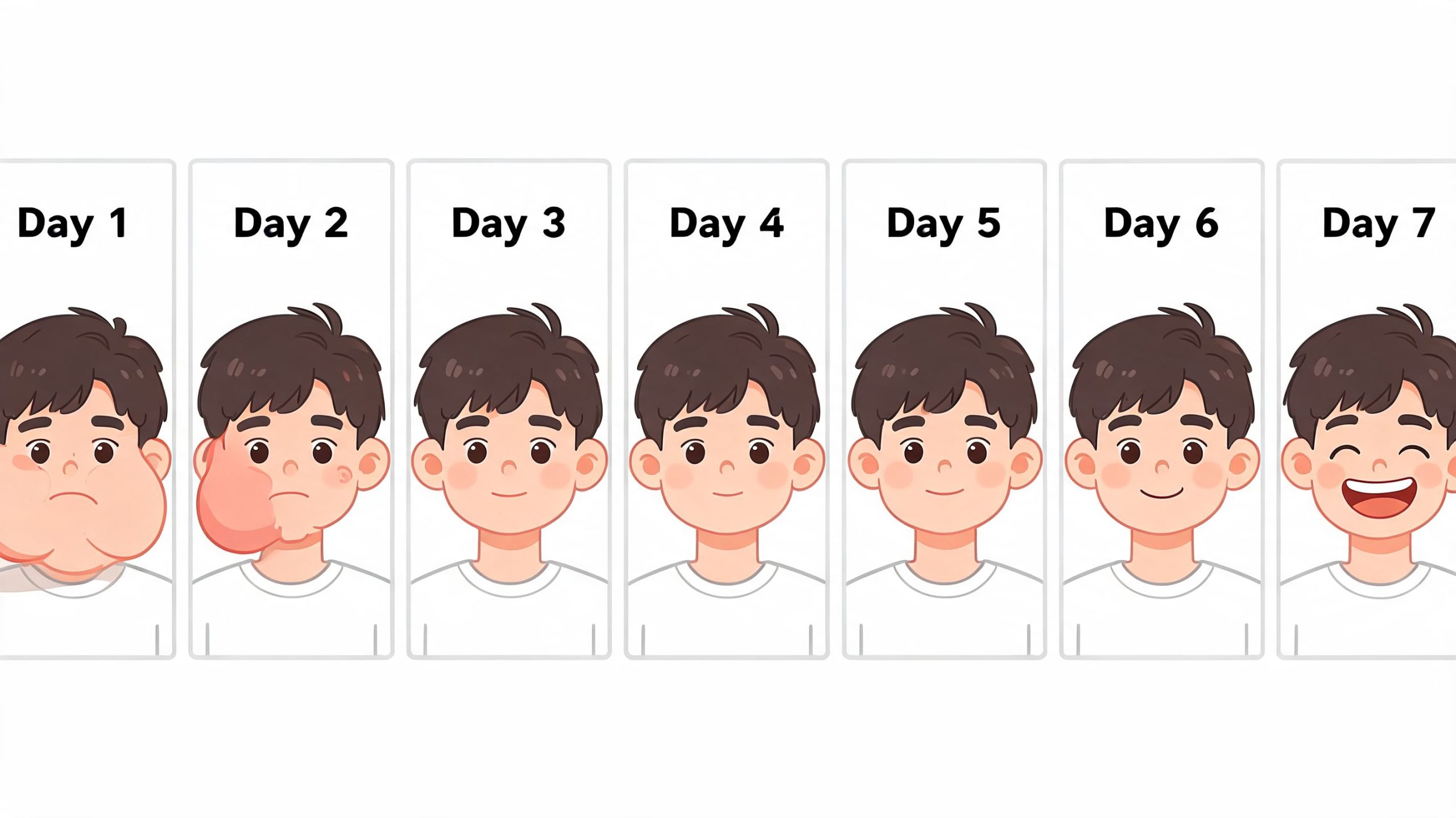
The first 24 hours
This is the quiet, protective stage. The most important job your body is doing is forming a blood clot in the extraction area.
You may notice oozing, numbness wearing off, and the first signs of soreness. This is also the time when many patients feel tired or groggy and just want to lie down. That’s expected.
According to Cleveland Clinic’s wisdom teeth removal guidance, the first 48 hours are the most critical because that’s when the blood clot forms and early healing begins.
Days 2 to 3
These days can feel frustrating because you’re healing, but you may not feel dramatically better yet. Swelling and jaw stiffness are often most noticeable in this window.
That doesn’t mean something is wrong. It usually means your body is in the middle of the normal inflammatory phase of healing. Keep thinking in short blocks of time. Get through the morning, the afternoon, then the evening.
Recovery often feels uneven. You might feel better for a few hours, then sore again later in the day. That’s still a normal pattern.
The first week
This is when many people start to feel the corner turning. You may still be eating carefully and talking a bit less than usual, but everyday life starts to feel possible again.
The same Cleveland Clinic guidance notes that most patients can resume normal routines in 3 to 5 days, while the overall initial recovery usually takes 1 to 2 weeks. That means you may be back at work, in class, or handling errands before the area feels fully settled.
For readers comparing different dental recoveries, our article on the dental implant recovery timeline can also help show how soft tissue healing and deeper bone healing often happen on different schedules.
Two weeks and beyond
By this point, many patients feel substantially more comfortable. The visible healing is well underway, and day-to-day discomfort is usually much less of a focus.
A simple way to think about it is this:
| Stage | What it usually means |
|---|---|
| First 2 days | Protect the clot and rest |
| Days 3 to 5 | Many people can start returning to routine tasks |
| Up to 2 weeks | Initial recovery continues |
| Several months | Internal bone healing continues quietly |
That last stage surprises many people. The visible recovery finishes long before the jawbone finishes its internal repair. You won’t usually feel that process happening, but it matters, and it’s one reason follow-up instructions are important even when you already feel much better.
Your Guide to Comfortable and Smooth Healing
The best recoveries usually aren’t dramatic. They’re calm, boring, and well organised. That starts with simple aftercare, done consistently.

Keep the first days simple
Your mouth doesn’t need a lot of activity right after surgery. It needs protection.
Use a short checklist:
- Rest with intention: Keep your schedule light and give yourself permission to do less.
- Drink water regularly: Small sips are easier than waiting until you’re very thirsty.
- Take medications exactly as directed: Staying ahead of discomfort is usually easier than chasing it later.
- Avoid anything that could disturb the area: Be gentle with your mouth and follow your dentist’s specific instructions.
If dental anxiety is part of the reason you’re reading so far ahead, it may help to learn how oral sedation can support a calmer dental visit. For many patients, feeling more relaxed during treatment makes recovery feel less overwhelming too.
What to eat
Food doesn’t need to be exciting for a few days. It needs to be soft, easy, and low effort.
Good choices often include foods like oatmeal, yoghurt, mashed vegetables, soup that’s not too hot, scrambled eggs, and smoothies eaten carefully if your dentist says they’re appropriate. The goal is comfort, not variety.
A few practical food reminders help:
- Choose soft textures first: If it needs hard chewing, it’s probably too early.
- Go cooler, not hotter: Very hot foods can be irritating when the area is fresh.
- Eat small amounts more often: That’s often easier than one large meal when your jaw feels stiff.
Soft food isn’t a punishment. It’s just a short-term tool that makes healing easier.
This short video gives a helpful visual sense of what the early recovery period can feel like:
Cleaning your mouth gently
People often get confused here. They know they should keep the mouth clean, but they’re afraid to go near the area.
That’s a reasonable fear. The answer is not to stop all cleaning. It’s to be gentle and follow the instructions you were given. Brush the other teeth carefully, avoid rough contact near the surgical sites, and don’t improvise with aggressive rinsing or poking at the area.
A home setup that helps
Set up one recovery spot before your appointment. Keep water, gauze if provided, tissues, medications, a phone charger, and soft food nearby.
That small bit of preparation helps more than people expect. When you’re tired and swollen, convenience matters.
Why Every Recovery Journey is Unique
Two people can have wisdom teeth removed on the same day and have very different recoveries. That’s not because one person “heals well” and the other doesn’t. It’s often because the procedures weren’t equally simple.
Simple extraction versus impacted tooth
The biggest factor is surgical complexity. A straightforward extraction is often easier on the tissues than removing an impacted wisdom tooth that hasn’t come in normally.
As explained in True North Oral Surgery’s recovery overview, a straightforward extraction may leave you feeling better in about 3 to 4 days, while an impacted wisdom tooth may take closer to a full week, with some tenderness lingering.
What this means for your own timeline
That difference matters when you’re booking time off or arranging help at home. If your dentist has told you the tooth is impacted, partially erupted, or likely to be a more involved removal, don’t compare your recovery to a friend who had a very quick extraction.
A few other factors can shape how you feel:
- Your general health: People who are already run down may feel slower to bounce back.
- How closely you follow aftercare instructions: Gentle, consistent care helps.
- Smoking or similar habits: These can interfere with healing and make recovery less comfortable.
- How many teeth are removed in one visit: More surgical sites can mean a more noticeable recovery.
A useful mindset is to expect improvement, not perfection. If each day is gradually easier, you’re usually moving in the right direction.
For nervous patients, personalised expectations matter. The right timeline for you depends less on internet averages and more on what your own dentist saw on your X-rays and during the procedure.
Keeping You Comfortable Pain Control and Sedation
Most patients don’t need a promise of “no discomfort”. They need a clear comfort plan. That’s much more realistic, and much more reassuring.

Use pain relief proactively
The first mistake many patients make is waiting until they’re very uncomfortable. It’s usually easier to stay on top of soreness by taking medication exactly as directed from the start.
If you’re ever unsure about combining common pain medicines, this guide on taking naproxen and acetaminophen together safely gives a useful plain-language overview. Your own dentist, pharmacist, or surgeon’s instructions should still come first, especially if you have stomach, kidney, liver, or bleeding concerns.
Sedation can change the whole experience
For anxious patients, comfort starts before the extraction. Some people cope well with local freezing alone. Others feel much better knowing there are sedation options available.
If your case needs a surgical approach, an oral surgeon consultation can help you understand what level of support is appropriate. That includes discussing how the procedure will be done, what kind of anaesthesia or sedation is suitable, and what your first day at home will likely feel like.
This is also the one place where it’s worth saying plainly that Inspire Dental Group offers oral sedation as one option for appropriate patients. It isn’t necessary for everyone, but for people who avoid treatment because of fear, it can make the appointment feel far more manageable.
When to Call Our Vancouver Clinic
A smooth recovery doesn’t mean zero symptoms. Some soreness, swelling, and a “this feels strange” stage are all common.
What matters more is the pattern. You usually want to see things staying stable or gradually improving. If something feels sharply worse instead of slowly better, that’s a good reason to check in.
Call your dental team if you notice any of these:
- Bleeding that doesn’t settle: Light oozing can be normal early on, but bleeding that seems persistent or difficult to control deserves a call.
- Pain that gets worse instead of better: Especially if you expected to be turning a corner and suddenly feel more uncomfortable.
- Swelling that seems to be increasing rather than easing: A worsening pattern is more important than the absolute amount.
- A bad taste, unpleasant smell, or signs that worry you: Even if you’re not sure it’s serious, ask.
- Trouble following the care instructions at home: If nausea, anxiety, or confusion about medications is getting in the way, contact the clinic.
You’re not bothering your dental team by asking a reasonable recovery question. That’s part of aftercare.
Your Questions Answered by Our Dental Team
When can I brush my teeth normally again
Brush your other teeth gently as directed, but be careful around the extraction area at first. There’s usually no need to stop brushing entirely; just avoid scrubbing the surgical sites.
What is dry socket in simple terms
Dry socket is when the protective blood clot at the extraction site doesn’t stay in place the way it should. Patients often describe it as pain that feels worse instead of better after the first few days. The best prevention is simple. Follow your aftercare instructions carefully and avoid anything your dentist told you could disturb the area.
Will I have stitches
You might. Some wisdom tooth removals involve stitches and some don’t. If you do have them, your dentist will tell you whether they dissolve on their own or need to be checked and removed.
When can I eat normally again
Return to normal eating gradually, not all at once. Start with foods that don’t need much chewing, then build up as comfort improves. If a food feels irritating, sharp, or hard to manage, it’s too early for that item.
When can I go back to work if I commute in Vancouver
Think about the full day, not just the job itself. Even if desk work feels possible, a long transit trip, lots of talking, or a physically busy shift may make an early return less comfortable. Many patients do better when they plan a little extra time rather than the bare minimum.
Ready to Plan Your Visit with Inspire Dental
Wisdom teeth removal recovery time is usually more manageable than people fear. Most patients do best when they plan for a quiet start, give themselves enough time away from work or school, and ask questions early instead of guessing.
If you’d like a clearer idea of what your own recovery may look like, the next step is a consultation and a simple plan built around your schedule, your procedure, and your comfort level. You can also save time before your visit by completing the new patient form online.
If you’re feeling unsure about wisdom teeth, book a visit with Inspire Dental Group. We can talk through your X-rays, your recovery concerns, and the options that may help you feel more comfortable from the procedure itself through the days that follow.


